
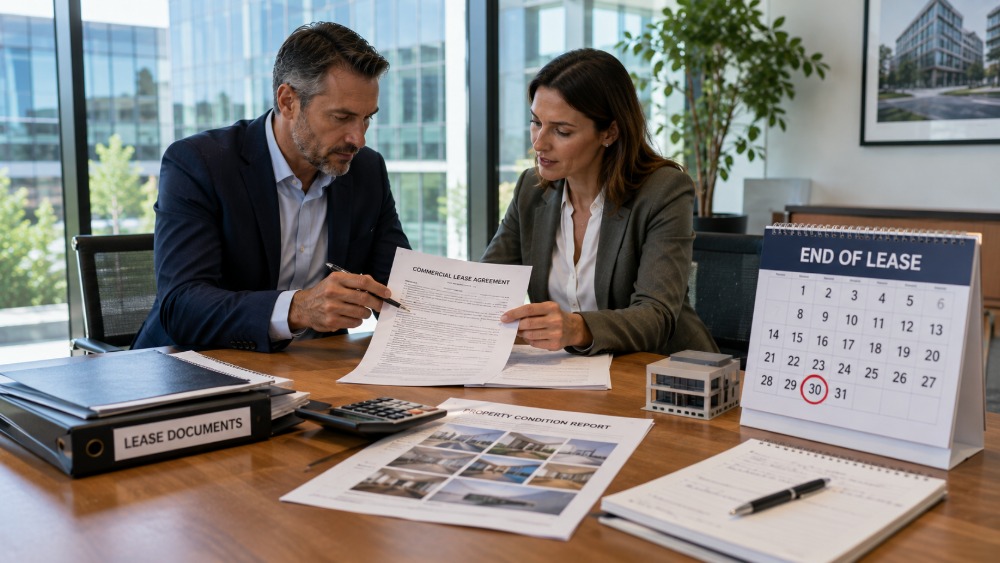
A commercial lease is a legally binding contract that gives a business the right to occupy and use a non-residential property, such as an office, warehouse, factory or shop, for an agreed period in exchange for rent.
It sets out what you can do at the premises, what you must pay, who handles repairs, and how the arrangement can end.
In Australia, most of its terms are decided by negotiation between the landlord and the tenant. Knowing what a commercial lease is and how its terms work helps you avoid costly surprises.
This article breaks down how a commercial lease works, the key terms to watch, how it differs from a retail lease, and what to check before you sign.
How Does a Commercial Lease Work in Australia?
A commercial lease works by transferring the right to exclusively occupy a property from the owner, known as the lessor, to a business, known as the lessee, for a fixed term, while the owner keeps ownership of the land.
In return, the tenant pays rent and agrees to a set of obligations written into the lease. A lease is both a property arrangement and a contract, so it creates a legal interest in the land as well as a set of promises that both sides must keep.
Australian courts treat a commercial lease as a contract, which means ordinary contract rules apply to it.
The High Court confirmed this in Progressive Mailing House Pty Ltd v Tabali Pty Ltd (1985) 157 CLR 17, holding that principles such as termination for repudiation or serious breach apply to leases.
In practice, this means a landlord can end the lease and claim damages if a tenant seriously breaks its terms, and a tenant may have remedies if the landlord does the same.
Commercial leases are mainly governed by the terms the parties agree, with state and territory property laws filling any gaps.
Because each state has its own property legislation, a lease drafted for premises in one state may need changes to work in another. This is why the wording of your specific commercial lease agreement matters so much.
What Are the Key Terms in a Commercial Lease?
The key terms in a commercial lease cover the length of the term and any options, rent and rent reviews, outgoings, permitted use, repairs and make good, and your rights to assign or sublet.
These clauses decide how much the property really costs you and how much control you have over it. Understanding each one before you sign puts you in a far stronger position to negotiate.
How Long Does a Commercial Lease Run?
A commercial lease usually runs for a fixed term, often between three and five years for smaller premises and around ten years for larger tenancies.
Many leases also include an option to renew, which lets the tenant extend for a further period if they give notice in time. Options are rarely automatic, so missing the notice deadline can mean losing the right to stay.
What Rent and Outgoings Will You Pay?
Rent is the base payment for occupying the premises, and it is usually reviewed at set times using a fixed percentage, the consumer price index, or a market review.
On top of rent, most commercial leases require the tenant to pay outgoings, which are the running costs of the property such as council rates, water rates, land tax, insurance and building maintenance.
You should check exactly which outgoings you are responsible for, because they can add a large amount to your total occupancy cost.
What Can You Use the Premises For?
The permitted use clause sets out which business activities you are allowed to carry out at the premises.
If this clause is too narrow, it can stop you from changing or growing your business later on. It is worth making sure the permitted use covers both your current activities and your likely plans.
Who Handles Repairs and Make Good?
Repair and maintenance clauses decide who fixes what during the lease, and they often place more responsibility on the tenant than people expect.
A make good clause requires the tenant to return the premises to an agreed condition at the end of the lease, which can mean removing fit-out and repairing damage.
These obligations can be expensive, so they are worth understanding well before you sign.
Can You Transfer or Exit the Lease Early?
Most commercial leases let you assign the lease to a new tenant or sublet part of the space, but usually only with the landlord’s consent.
Leaving early without following the lease process can leave you liable for rent for the rest of the term, plus make good costs and other losses.
Negotiating flexible exit rights at the start gives you more options later.
What Is the Difference Between a Commercial Lease and a Retail Lease?
The main differences between a commercial lease and a retail lease come down to the laws that apply and the protections a tenant receives.
A retail lease is covered by special state and territory laws that protect small retail tenants, while a general commercial lease is mostly governed by the terms the parties negotiate.
Retail leasing laws apply differently in each state and territory.
They often cover shops and public-facing service businesses, such as cafés, salons, and stores, but they can also apply to other business premises depending on the use of the premises, the rent threshold, the location, and the statutory exclusions that each state sets.
A general commercial lease covers offices, warehouses, factories and similar premises that fall outside those retail rules.
The table below compares the two at a glance.
| Feature | Commercial lease | Retail lease |
| Typical use | Offices, warehouses, factories, industrial sites | Shops, cafés, salons and other public-facing outlets |
| Governing law | General state property and contract law | State or territory Retail Leases Acts plus general law |
| Tenant protections | Mainly what the parties negotiate | Mandatory protections set by statute |
| Landlord disclosure | Not generally required by statute | Disclosure statement usually required before signing |
| Dispute resolution | Courts, tribunals or mediation depending on the jurisdiction and dispute | Often prescribed mediation, tribunal or small business commissioner pathways |
Because retail laws override conflicting lease terms, a clause in a retail lease that tries to remove a tenant’s statutory right is usually void.
Each state sets its own rules for when these laws apply.
In South Australia, for example, the Retail and Commercial Leases Act 1995 generally applies to many retail shop leases and commercial leases where the annual rent does not exceed $420,000, a threshold that rose from $400,000 on 1 July 2025.
The rent figure is not the only test, because the Act’s application also depends on the premises, their use, and a list of statutory exclusions.
What Should You Check Before Signing a Commercial Lease?
Before signing a commercial lease, you should check the permitted use, the full cost including outgoings and GST, the term and renewal options, your make good obligations, and whether the lease needs to be registered.
Start with whether your intended use is allowed at the premises under both the lease and the local council zoning, because the wrong zoning can stop you from trading.
Then add up the true cost of the lease, including base rent, outgoings, and goods and services tax, which usually applies to commercial rent.
Long leases also raise the question of registration.
Leases over a certain length, commonly more than three years including options, are often registered on the land title to protect the tenant’s interest, with the process and fees varying by state.
Given how much is at stake, having the lease reviewed before you sign is one of the most cost-effective steps you can take.
Why Does Getting Your Commercial Lease Right Matter?
Getting your commercial lease right matters because the document controls your costs, your flexibility, and your legal risk for the whole term, which is often many years.
Leasing is a common way for businesses to secure their premises, and Australia is home to a large business sector, with the Australian Bureau of Statistics recording more than 2.7 million actively trading businesses in the country as at June 2025.
For many of the businesses that operate from physical premises, the lease is one of the largest and longest financial commitments they will ever make.
A poorly drafted or poorly understood lease is a common source of disputes, from arguments over outgoings and rent reviews to claims about make good at the end of the term.
Sorting these issues out after they arise is far more expensive and stressful than dealing with the wording before signing.
Clear, fair terms protect both landlords and tenants and help everyone avoid costly conflict.
Need Help With Your Commercial Lease?
Understanding what a commercial lease is, and the key terms inside it, helps you sign with confidence and avoid expensive surprises down the track.
As commercial lease lawyers in Australia, my law firm offers fixed-fee help to draft, review and negotiate commercial and retail leases for landlords and tenants.
Contact my law firm today by calling 1300-529-888.
Frequently Asked Questions
Is a commercial lease the same as a commercial lease agreement?
Yes, the terms commercial lease and commercial lease agreement refer to the same thing. Both describe the written contract between a property owner, the lessor, and a business tenant, the lessee. It grants the right to occupy non-residential premises for an agreed term in exchange for rent, and sets out each party’s rights and obligations.
Do commercial leases attract GST in Australia?
Yes. GST usually applies to commercial or retail lease rent where the landlord is registered, or required to be registered, for GST and the lease allows it to be recovered, so the tenant pays GST on top of base rent. Ordinary residential rent is generally input-taxed rather than GST-free. Always confirm whether quoted figures include or exclude GST before signing.
How long is a typical commercial lease in Australia?
A typical commercial lease in Australia runs for a fixed term, often between three and five years for smaller premises and around ten years for larger tenancies. Many leases include an option to renew for a further period. The right term depends on your business plans, so balancing security against flexibility is important.
Does a commercial lease need to be registered?
Whether a commercial lease needs to be registered depends on its length and the state or territory. Leases over a certain term, commonly more than three years including options, are often registered on the land title to protect the tenant’s interest. The exact rules, processes and fees vary across each Australian state and territory.
What is the difference between a lessor and a lessee?
The lessor is the owner of the property who grants the lease, often called the landlord. The lessee is the business that takes the lease and occupies the premises, often called the tenant. In a commercial lease, the lessor keeps ownership of the land while the lessee gains the right to use it for the term.